
Technical Insight - Engineering a luxury residential micro spa | Unity Architects + SWJ Consultants
Introduction
During this technical insight, Unity Architects and SWJ Consultants explain how close architectural and structural collaboration brought the ambitious Carroll Drive micro spa project to life.
Unity Architects frequently collaborate with aligned professionals throughout the built environment to ensure projects are well-considered and fully coordinated. The most successful projects are born from seamless collaboration across disciplines and following our recent feature on the glazing solutions for the Carroll Drive project, this article shifts the focus to the structural skeleton of the build.
Working closely with the structural engineering experts at SWJ Consultants, we have transformed an underutilised double garage into a bespoke luxury micro spa; complete with a gym, vestibule, compact sauna, shower, and changing area. This £150,000 residential micro-project demanded an uncompromising approach to both design and engineering. Below, we explore the critical technical aspects that defined our collaboration.
Trial Pits and Foundation Design
A micro-project within an existing residential boundary inherently brings spatial and logistical constraints. Before any steel can be erected, a full understanding of site constraints is required.
To maximise development opportunities, the proposal makes use of residual garden space surrounding the existing double-garage as developable land. The original dwelling was constructed approximately 10-years ago, and this type of ‘left-over’ garden space is commonly found within mass-house building developments, leaving homeowners the difficult task of finding a use for such awkward spaces.
In this instance, a portion of garden (approximately 2.1 x 4.6 metres) wrapped around the back of the garage and we identified this as an opportunity to locate the sauna and changing space.
This design decision placed the proposal against the land ownership boundary and critically, adjacent neighbouring structures.
Early in the pre-construction phase, SWJ Consultants specified targeted trial pit inspections. These physical investigations provided crucial data regarding the depth and condition of the existing garage foundations, neighbouring foundations and the underlying soil composition.
Consequently, the engineers designed a party wall foundation, including compressible filler to separate the existing and proposed foundations. Our client was able to use the foundation design as part of party wall notifications and agreements with adjacent owners.
Furthermore, the engineers proposed a ‘Hit & Miss’ foundation casting sequence to observe the stability of surrounding soil and further mitigate any disturbance to the neighbouring property.
Architects’ insight:
“If you are developing adjacent existing buildings or structures, ensure trial pit excavation and soil assessment by a structural engineer to enable accurate foundation design and party wall agreements prior to construction.”
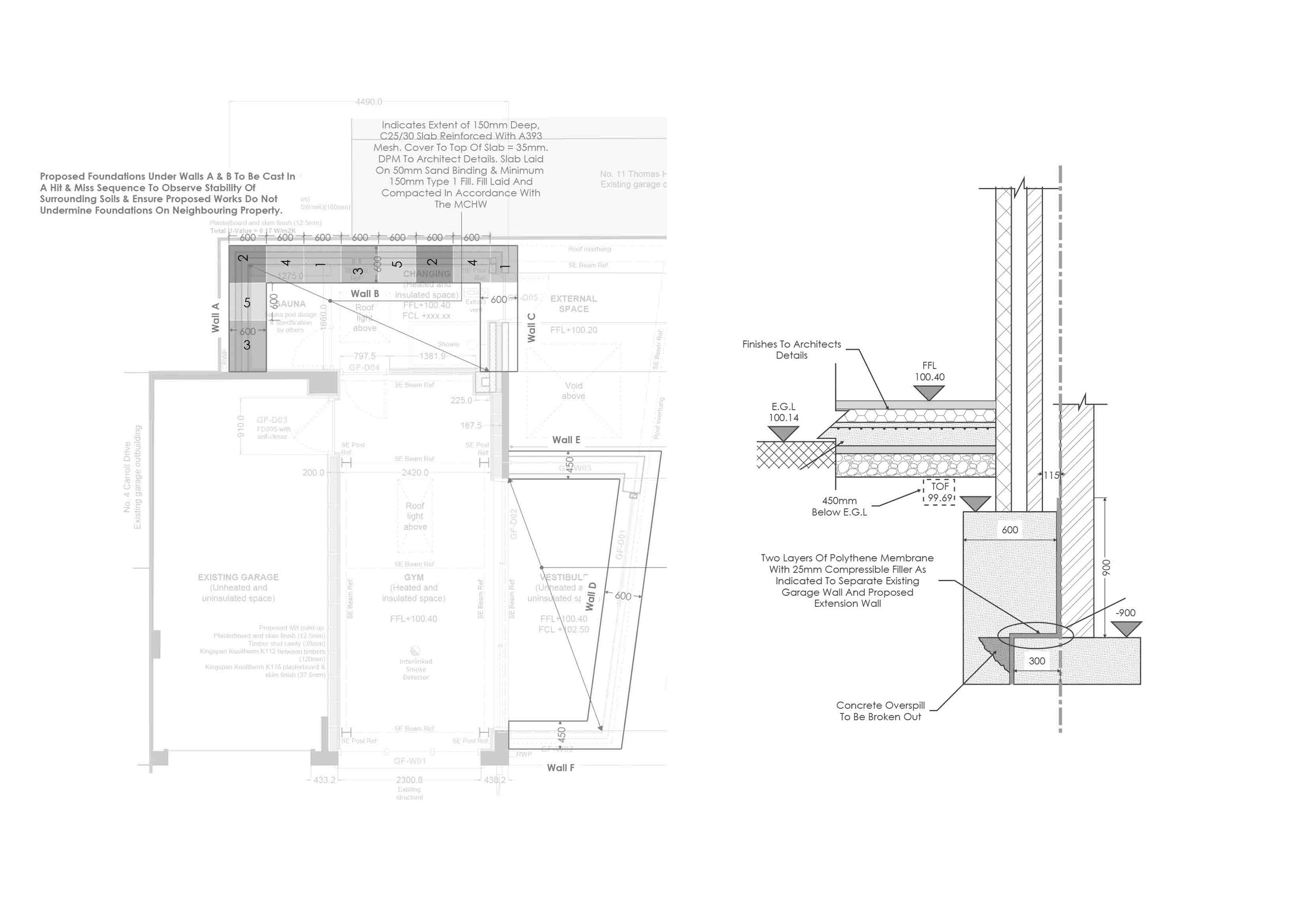
[SWJ Consultants’ proposed foundation plan and proposed party wall foundation]
Cantilevered Roof
A defining feature of the Carroll Drive project is the L-shaped cantilevered roof.
During concept design the L-shaped roof was originally introduced to conceal the awkward connection between the existing garage and the proposed rear extension (residual land mentioned above).
The unwanted visual relationship between the existing garage and the proposed extension generated the requirement for an ingenious solution. The design response was to create an L-shaped roof that would wrap around the proposed elements in tandem with introducing a dominant architectural language.
Developing this strategy further, it was considered best for the L-shape roof to float above the vestibule and hot tub, to minimise the impression of its mass and encroachment upon the Clients’ own garden space.
The goal was to create a sense of weightlessness, projecting out seamlessly to blur the boundaries between the indoor spa facilities and the garden. SWJ Consultants were tasked with making this gravity-defying vision a reality. Through rigorous structural modelling, SWJ engineered a bespoke framework that safely managed the cantilever's bending moments and deflection limits, all while maintaining the slim, elegant profile required by our architectural intent.
The L-shaped cantilevered roof has become a dramatic focal point of the scheme, made possible by Unity Architects’ vision and SWJ Consultant’s engineering.
Architects’ insight:
“Design never stops. Here we have demonstrated the design transition from early concept through to technical design, in anticipation of construction. Great architectural outcomes require an agile skillset that attends to both concept design and technical aspects.”
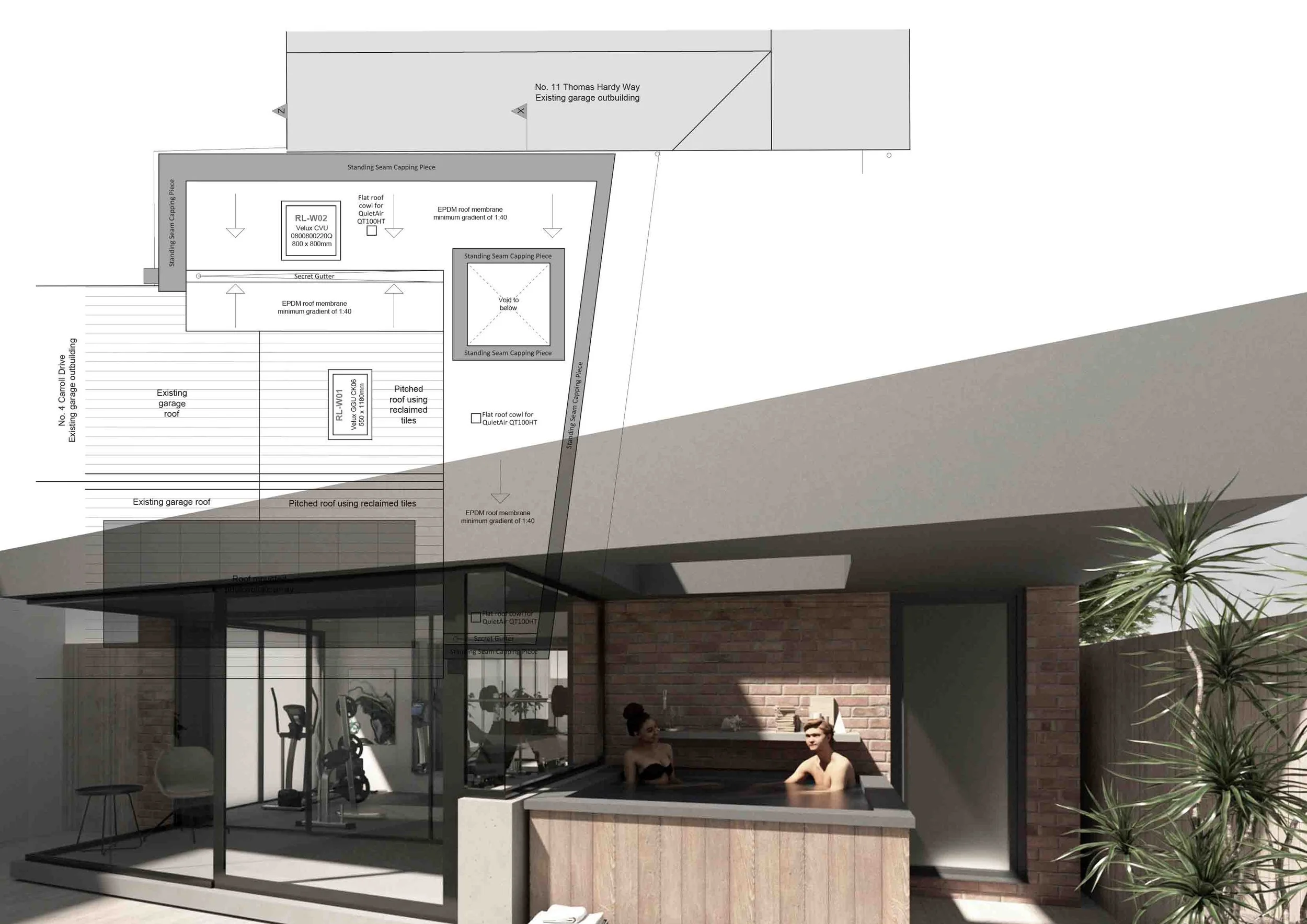
[Unity Architects’ early concept model and proposed plan of the L-shaped cantilevered roof]
Exposed Steel Structure and Connection Details
A unique Client requirement documented during RIBA Stage 1 – Preparation and Brief, was to have an exposed steel structure.
Rather than concealing the structural framework, the Client sought an aesthetic that actively celebrated it. The exposed steel structure was chosen to provide a contemporary, slightly industrial edge that contrasts beautifully with the high-end luxury finishes of the micro spa.
Internal exposure of the steel frame forms a beautiful contrast with the conditions of the cantilevered roof. Externally, there is no structure to be seen; the building elements are weightless and delicately suspended in space. Internally, the steel is fully visible as the beams holding up the roof penetrate the building fabric. The interplay between structural invisibility and honesty creates an unexpected experiential dynamic.
Progressing the exposed steel further, the Client identified Manchester’s Royal Exchange Theatre as a precedent for ‘an object within an object’. Whilst Levitt Bernstein’s installation was of a totally different scale and function, Unity Architects and SWJ Consultants have successfully introduced an exposed structural framework to an existing garage space that is already spatially constrained. And by treating the steel connections as architectural features rather than purely functional joints, we have achieved a crisp, highly engineered aesthetic that elevates the interior space.
Architects’ insight:
“RIBA Stage 1 – Preparation and Brief, sets the project objectives before any design work has commenced. This is a critical and strategic stage for all projects. Client requirements should be captured, tested via concept design and realised during technical design. Here you can appreciate the Client requirements documented at the outset of the project have informed the design response and constructed outcomes.”
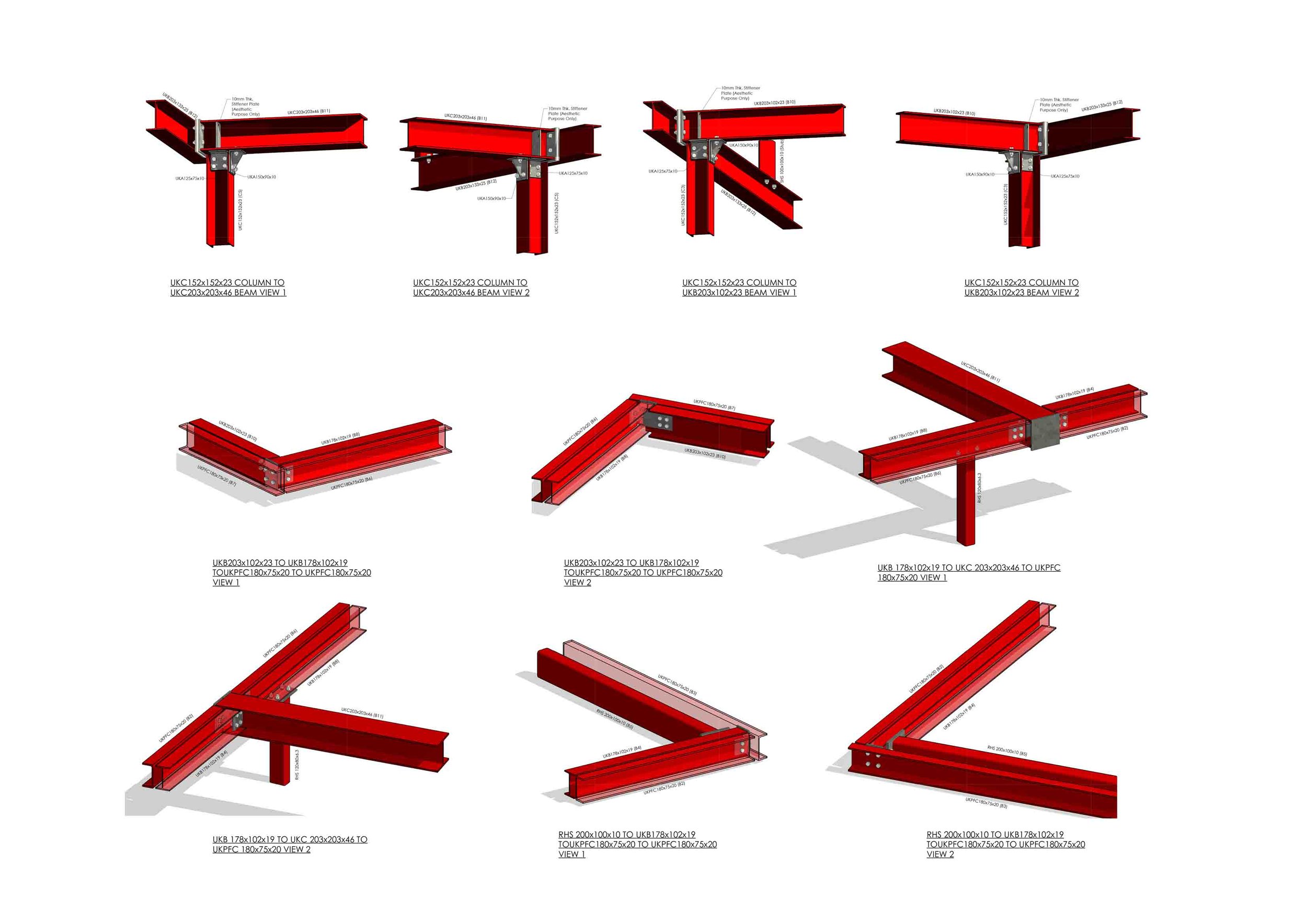
[SWJ Consultants 3D connection details]
Value Engineering and Buildable Solutions
Consistent with our approach across all projects, a core driver is demonstrating exceptional design value - taking something basic and making it special without letting costs spiral. This required a highly pragmatic approach.
Through continuous dialogue, Unity Architects, SWJ Consultants and the Principal Contractor (Four Walls Building Company) engaged in a rigorous value engineering process before fixing the technical design. We assessed multiple structural configurations to find the most cost-effective path that did not dilute the architectural concept, including;
Internal non-structural steel columns to prevent breaking out the existing garage concrete slab.
Structural roof design optioneering that delivers the architectural intent, in tandem with the build sequence and practicalities of the Contractor’s accessibility.
Steel designed in manageable sections for transport, manoeuvrability and on-site assembly.
Architects’ insight:
“As part of the professional collaboration exercise, early contractor engagement ensured that Unity Architects and SWJ Consultants developed a technical package that was buildable and logical from a construction perspective. There are always numerous solutions via design; We have ensured the technical proposal is efficient for the Contractor. These efficiencies reflect back to the Client via reduced construction costs and reduced construction timescales.”
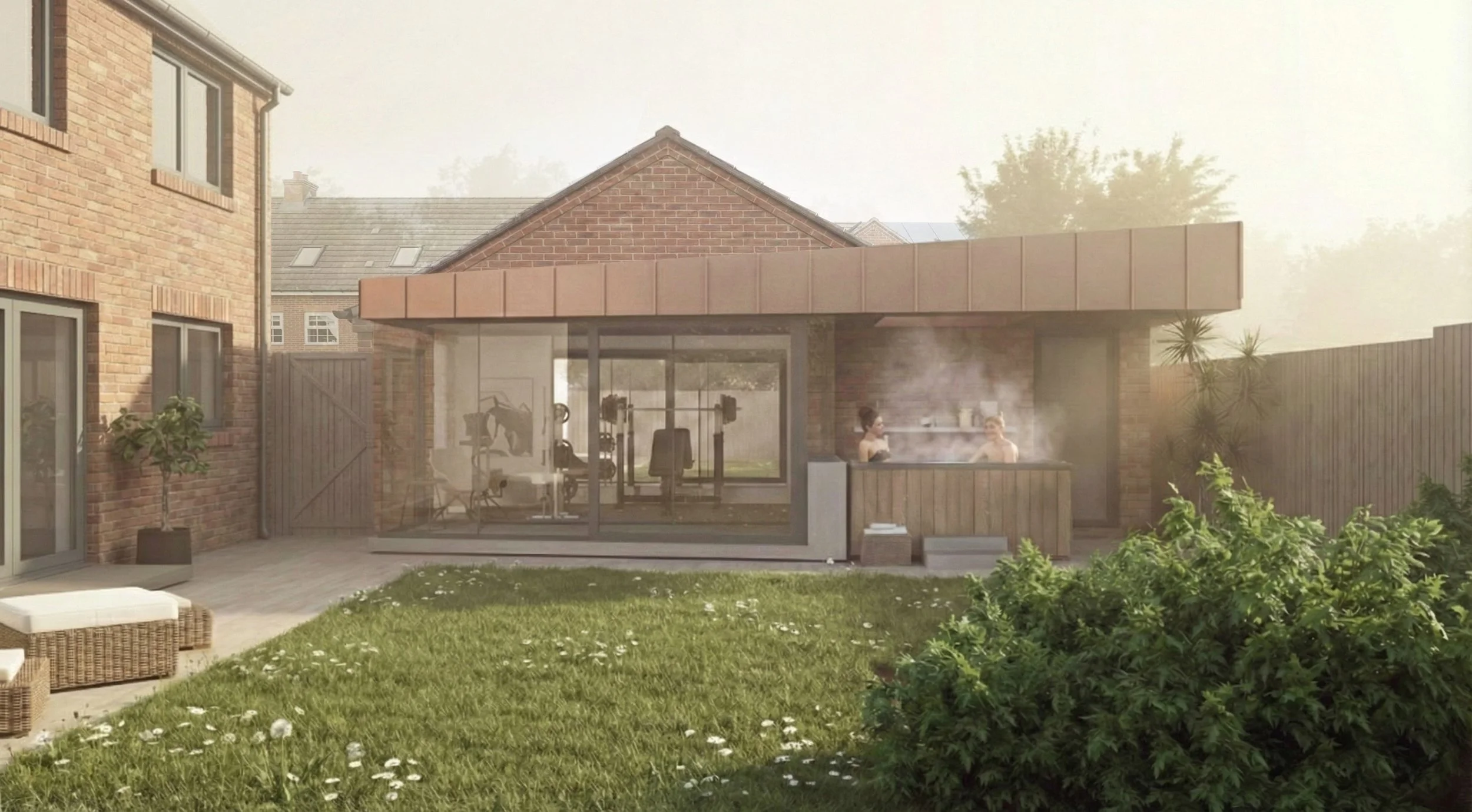
[Unity Architects’ visualisation of the proposed scheme]
Conclusions
Carroll Drive stands as a testament to what can be achieved when architects and structural engineers collaborate early in the design process. By identifying structural requirements and embracing the design challenges rather than shying away from them, Unity Architects and SWJ Consultants were able to deliver an inspiring, high-performance, luxury residential micro spa for the Client’s enjoyment.
Click here to read SWJ Consultants’ article!
Are you looking for a luxury residential architect for your project? Contact us to see how Unity Architects can transform your property.
Expert Content Written by: Jason Laity BA(Hons) DipArch DipAP RIBA [Founding Director and Principal Architect] of Unity Architects.